I've had an interesting conversation repeated a few times lately. It's on the question of whether "socialist" is a designation, like "fascist," which is automatically negative, and which should lead us to condemn any person who self-identifies this way. "Communist," of course, gets an even stronger reaction.
Internet communists can be a funny bunch; they enjoy throwing around Soviet symbology, I guess mainly to shock people. And I haven't noticed much economic literacy among them, even compared to me -- and I'm no whiz at it myself.
But they don't strike me as evil people. They don't actually want to eat the rich. They want to redistribute property. It can be a bit utopian; they imagine it will be easier than it is. And I bristle when they say things like "we can't expect a solution from the system, we need a revolution!" No. I'm steadfastly anti-revolution. People imagine it will be a shortcut to drastic change, but really revolutionary change takes time and there is no shortcut. A revolution usually results in massive loss of life, but the actual change is always much smaller than you'd think. The French revolution, for instance, was short-lived and ended in another monarchy.
Though my real beef with communism is that it doesn't work -- in no case has it ever actually succeeded, except when it becomes less purely communistic, as China has in recent years. There are two reasons for this, and I can't say which is more important: first, there are massive coordination problems with distributing necessary goods to a nation, and cash is a really easy way to solve these. It's imperfect, but "one guy in an office figures out what shoes everybody gets" is even worse. The second reason is that no communist nation was actually democratic, no matter how much they claimed they were. This is probably a function of them having been produced by revolution instead of actually the will of the people. Totalitarianism is horrible and we all know it's horrible, so it should be utterly unsurprising that communist nations which were also totalitarian were horrible. Fascism and communism seem very similar, not because fascism is really socialist (it's not) but because they're both totalitarian.
Now I'm always the first to say that ignorance is a very serious problem. If dumb communist kids actually got the government they think they want, it would probably turn out badly, so I would oppose that. Yet I still do have a different moral feeling toward an ignorant communist than I do toward a neofascist, because the communist is (perhaps very ineffectively) advocating for an end to poverty, while the neofascist is advocating for an end to Jews. I can look at the (totally imaginary) end states that each hopes for, and can say that I admire the utopia of the communist (which would never happen) more than I do the utopia of the fascist (which, no matter what grounds it was based on, would almost certainly involve depriving some people of human rights even if it worked as planned).
The next objection to communism is that it discounts property rights. The libertarian says taxation is theft; the communist says property is theft. The reason for the totally different deontological statements is that nobody really knows what sort of property rights are natural, or how you get them. Does everyone have an equal right to the goods of the earth? Or do we earn a greater or lesser share depending on how hard we worked or what we got from our parents? As I have become more and more of a consequentialist over the years, I've concluded that property rights only exist in the service of human life, liberty, and happiness. So we should have what property rights help people to flourish, whatever those are. If it means that some billionaires lose a lot of their property, I don't really care provided it actually serves the good of everyone. Meanwhile if property distribution isn't completely equal, but that's the best way to make sure everyone has the necessities of life, I'm fine with that also. The question between capitalism and socialism, for me, is not a moral one, it is a factual one, a practical question of what works best.
Now advocates of capitalism will point to their successes and communism's failures. They will mention the people that capitalism has pulled out of poverty, and the famines that devastated the Soviet Union and North Korea -- human-created famines which amount to genocide.
But one may also point of the death toll of capitalism. Isn't every person who starved to death in a non-communist nation a casualty of capitalism? After all, the food, today at least, is available. Capitalism boasts of the ability to distribute goods more efficiently that communism, but it too sometimes fails. More specifically, I might mention horrible disasters that can be laid at capitalism's door:'
The Triangle Shirtwaist Fire
The Bangladesh garment factory fire
The Irish potato famine -- did you know that during the famine Ireland was exporting food? The Irish just couldn't afford to buy it.
The Opium Wars in China -- honestly, the British East India Company could get its own whole list; China wasn't the only country it ravaged for money.
Belgium's rape of the Congo
Child slavery in chocolate plantations
And I could go on and on. Water pumped out of aquifers to bottle for profit, while local villagers' wells all go dry. Farmers evicted from their land so the government could hand it to a multinational corporation. Terrible conditions in rubber plantations. Terrible conditions in sweatshops. Most countries are capitalist and in all of these, there is poverty, death from inadequate healthcare, death from unsafe workplaces, and so on.
But! You might add. That's not real capitalism, that's crony capitalism. To which I would say, exactly. Pure economic systems exist only in the mind. Advocates can always imagine it could be done more perfectly. In reality, we should acknowledge the common failure modes exist because it is easy to fall into them.
So what would I advocate? Some kind of balance, probably. I have abandoned the idealism that once convinced me everything could regulate itself if only it were allowed to. You want Oliver Twist? Because that's how you get Oliver Twist. Some regulation is going to be necessary, even while it's clear we haven't done enough to separate the regulatory bodies from the industries themselves. We don't need a revolution on that, we need some tweaks.
When I hear someone say, seriously, that they would like to tweak things in a more socialist direction . . . I'm really fine with it. There's a lot more socialist things could be before it got anywhere close to wiping out private industry. Say, a guaranteed minimum income. Or universal healthcare. That stuff could be good, possibly, if done very carefully. Certainly seems as likely to work out well as the opposite. Now I doubt these people are going to get what they want, either, but they'll try and if they manage a few baby steps, I'd be cautiously hopeful.
And as for communists? I think it's great that they have made the moral judgments that property rights exist to serve people and that equality is good. I would agree with them on that; I think this is a moral and compassionate stance. But I also think that they need to seriously study history and economics to try to find ways to change our current society more in the direction of their dream. Waving red banners and sharing Soviet memes (which are very offensive to Holodomor survivors, by the way) aren't going to help them get there.

Sunday, December 30, 2018

Saturday, December 29, 2018
Millionaire shortbread
I made millionaire shortbread today. If you don't know, it's a bar cookie with a layer of shortbread, a layer of toffee, and a layer of chocolate. It's amazing.
But I thought I'd post because I combined two different recipes, and I'll never be able to remember which those were if I don't write them down!
Shortbread (from here)
2 sticks (1 cup) salted butter, at room temperature
1/2 cup granulated sugar
2 cups all-purpose flour
Cream the butter and the sugar and then mix in the flour. Put in a big pan (I used my 9x`13 pyrex) and bake at 350 for 18-20 minutes.
Tip: you need to do this part first. I didn't, which caused problems later. Get the shortbread in the oven before starting the toffee.
But I thought I'd post because I combined two different recipes, and I'll never be able to remember which those were if I don't write them down!
Shortbread (from here)
2 sticks (1 cup) salted butter, at room temperature
1/2 cup granulated sugar
2 cups all-purpose flour
Cream the butter and the sugar and then mix in the flour. Put in a big pan (I used my 9x`13 pyrex) and bake at 350 for 18-20 minutes.
Tip: you need to do this part first. I didn't, which caused problems later. Get the shortbread in the oven before starting the toffee.
Toffee (from here)
1 cup (2 sticks) butter
1 cup sugar
pinch salt
Melt the ingredients together in a heavy pot on medium heat, stirring often. In about 20 minutes it will turn brown and reach 290-300 degrees. It's done now and you need to immediately assemble the millionaire shortbread.
Assembly
Pour the toffee over the (hopefully done and slightly cooled) shortbread. Sprinkle chocolate chips over the top. Wait for them to melt and then spread the melted chocolate over the toffee with a spoon. Cut into squares while it's still warm. Let cool for at least an hour.
I highly recommend these if you, like me, feel like you haven't yet eaten enough decadent food this season!
1 cup sugar
pinch salt
Melt the ingredients together in a heavy pot on medium heat, stirring often. In about 20 minutes it will turn brown and reach 290-300 degrees. It's done now and you need to immediately assemble the millionaire shortbread.
Assembly
Pour the toffee over the (hopefully done and slightly cooled) shortbread. Sprinkle chocolate chips over the top. Wait for them to melt and then spread the melted chocolate over the toffee with a spoon. Cut into squares while it's still warm. Let cool for at least an hour.
I highly recommend these if you, like me, feel like you haven't yet eaten enough decadent food this season!
Saturday, December 22, 2018
Solstice soup and the carbon cycle
I've been celebrating solstices and equinoxes, in a quiet way, for three years now. I know it must have been in a quiet way, because although I definitely have been posting about it on facebook, my own husband thinks "nobody celebrates Solstice." Ha.

I like astronomical holidays because they are for everyone. You don't have to believe any given thing; the sun still moves the way it moves. And it brings a lot of thoughts and reflections: about darkness and light, about change, about the cycles of life.
In my epic fantasy series (still mostly a series of outlines) the people celebrate four feasts for the four elements. Spring equinox is the Water Feast, celebrated by dancing in the fields, preferably in the rain, and announcing engagements; summer solstice is the Air Feast, celebrated by lots of singing and flute-playing, and also weddings; autumn equinox is the Earth Feast, celebrated by eating a lot of harvest foods; and winter solstice is the Fire Feast, celebrated by bonfires and staying up all night toasting things on the fire and singing carols. I like making up fantasy religions.
Unfortunately I can't actually adopt their customs without a tribe of people to do them with me, though I still do like the idea of spending Solstice burning fires. Our fireplace is still not usable since we need to get the chimney cleaned, so I just lit a bunch of candles.
This year my big thought was about the carbon cycle. It's not something I really understood until recently, with the help of some science fiction books about terraforming and a lot of news articles about climate change. What we hear in school is that plants turn carbon dioxide into oxygen. But somehow I never thought where the carbon goes. Of course the carbon, together with the water the plant absorbs, become the body of the plant, largely in the form of hydrocarbons--carbohydrates, cellulose, even fat. That's how the plant stores its energy. When you eat the plant (or any animal does) you release that energy again, but to use the energy you put the carbon back into the oxygen you breathe, which makes carbon dioxide. (I'm totally leaving out the nitrogen cycle here, which is also super cool.)
But! Not all of that hydrocarbon gets eaten by people. Some of it decays, so that the carbon goes back into the atmosphere--that's why you can't reduce the carbon dioxide in the atmosphere just by planting things and cutting them down. To reduce carbon dioxide, carbon has to be sequestered--either by large living plants keeping it in use for a long time, or by burying it deep in the ground where it can't be released, as in coal, oil, and natural gas. The stores of carbon deep in the earth are the result of millennia of carbon sequestration, which gradually reduced the carbon in the atmosphere until it reached modern levels.
That stored carbon is a mixed blessing. On the one hand, you can get all that energy--millennia of sunshine, all stored up in the carbon. On the other hand, you can bring our atmosphere very suddenly to prehistoric levels of carbon dioxide. We have to be very careful and respectful when it comes to that bottled sunshine. I wonder what colonists on another planet might think, after generations of trying to sequester carbon to make their atmosphere breathable, of the heedless way Earthers just burn the stuff up.
But this isn't meant to be a downer on fire. Fire is awesome and powerful. It allows us to live through the winters and make our food nourishing enough to sustain our massive brains. It's like a little sun, because it releases the sunlight from past years. And it echoes the way our own bodies burn carbohydrates for energy--fire breathes out carbon dioxide just like we do. Can you picture a tiny little fire in each of your mitochondria in each of your cells?
In the summer, the earth breathes in. It stores the sunlight in millions of plants, filling its atmosphere with oxygen. In the winter, it breathes out--as our fires and our bodies both use up the stored energy, and release carbon dioxide. We need both the breathing in and the breathing out to stay alive. It's a beautiful, complex dance to think about.
Anyway, on to the soup. This is my mother's Christmas Eve soup, which she got from her mother. Trouble is, no one in the family agrees with me that Christmas Eve is for soup, so I thought I'd make it for Solstice instead. As an extra benefit, it can be vegan, which was nice given Solstice was on a Friday.
Solstice Soup
1/2 yellow onion
4-6 carrots
4 stalks of celery
1 quart V8 juice
1 cup water
1/2 cup pearl barley
1 can white beans
1 can green beans
1/2 cup frozen chopped spinach
1/2 cup peas
1 tsp vegetable soup base*
1 tsp Old Bay
dash Worcestershire sauce**
salt, pepper, garlic powder to taste
dash Tabasco or cayenne if you like spice
Chop the onion and saute on medium high heat until it is starting to brown. Add the liquid, chopped carrots and celery, and barley. Cook for 30 minutes and then add all the other ingredients. Feel free to sub in or out whatever vegetables you like and have. Taste as you add the seasonings and don't stop till it tastes right.
*I used Better Than Bouillon, but a bouillon cube would also work. Beef flavor is good if you don't have vegetable.
**This is technically not vegan because it has anchovies. A dash of soy sauce or aminos might be good.
I served it with biscuits and there was only a little bit of whining. At first Miriam whined because she "hates soup" (she does??) and then I told her it had green beans in it and she loved it, but then Marko whined because he does not like green beans. Oh well. It got et.

I like astronomical holidays because they are for everyone. You don't have to believe any given thing; the sun still moves the way it moves. And it brings a lot of thoughts and reflections: about darkness and light, about change, about the cycles of life.
In my epic fantasy series (still mostly a series of outlines) the people celebrate four feasts for the four elements. Spring equinox is the Water Feast, celebrated by dancing in the fields, preferably in the rain, and announcing engagements; summer solstice is the Air Feast, celebrated by lots of singing and flute-playing, and also weddings; autumn equinox is the Earth Feast, celebrated by eating a lot of harvest foods; and winter solstice is the Fire Feast, celebrated by bonfires and staying up all night toasting things on the fire and singing carols. I like making up fantasy religions.
Unfortunately I can't actually adopt their customs without a tribe of people to do them with me, though I still do like the idea of spending Solstice burning fires. Our fireplace is still not usable since we need to get the chimney cleaned, so I just lit a bunch of candles.
This year my big thought was about the carbon cycle. It's not something I really understood until recently, with the help of some science fiction books about terraforming and a lot of news articles about climate change. What we hear in school is that plants turn carbon dioxide into oxygen. But somehow I never thought where the carbon goes. Of course the carbon, together with the water the plant absorbs, become the body of the plant, largely in the form of hydrocarbons--carbohydrates, cellulose, even fat. That's how the plant stores its energy. When you eat the plant (or any animal does) you release that energy again, but to use the energy you put the carbon back into the oxygen you breathe, which makes carbon dioxide. (I'm totally leaving out the nitrogen cycle here, which is also super cool.)
But! Not all of that hydrocarbon gets eaten by people. Some of it decays, so that the carbon goes back into the atmosphere--that's why you can't reduce the carbon dioxide in the atmosphere just by planting things and cutting them down. To reduce carbon dioxide, carbon has to be sequestered--either by large living plants keeping it in use for a long time, or by burying it deep in the ground where it can't be released, as in coal, oil, and natural gas. The stores of carbon deep in the earth are the result of millennia of carbon sequestration, which gradually reduced the carbon in the atmosphere until it reached modern levels.
That stored carbon is a mixed blessing. On the one hand, you can get all that energy--millennia of sunshine, all stored up in the carbon. On the other hand, you can bring our atmosphere very suddenly to prehistoric levels of carbon dioxide. We have to be very careful and respectful when it comes to that bottled sunshine. I wonder what colonists on another planet might think, after generations of trying to sequester carbon to make their atmosphere breathable, of the heedless way Earthers just burn the stuff up.
But this isn't meant to be a downer on fire. Fire is awesome and powerful. It allows us to live through the winters and make our food nourishing enough to sustain our massive brains. It's like a little sun, because it releases the sunlight from past years. And it echoes the way our own bodies burn carbohydrates for energy--fire breathes out carbon dioxide just like we do. Can you picture a tiny little fire in each of your mitochondria in each of your cells?
In the summer, the earth breathes in. It stores the sunlight in millions of plants, filling its atmosphere with oxygen. In the winter, it breathes out--as our fires and our bodies both use up the stored energy, and release carbon dioxide. We need both the breathing in and the breathing out to stay alive. It's a beautiful, complex dance to think about.
Anyway, on to the soup. This is my mother's Christmas Eve soup, which she got from her mother. Trouble is, no one in the family agrees with me that Christmas Eve is for soup, so I thought I'd make it for Solstice instead. As an extra benefit, it can be vegan, which was nice given Solstice was on a Friday.
Solstice Soup
1/2 yellow onion
4-6 carrots
4 stalks of celery
1 quart V8 juice
1 cup water
1/2 cup pearl barley
1 can white beans
1 can green beans
1/2 cup frozen chopped spinach
1/2 cup peas
1 tsp vegetable soup base*
1 tsp Old Bay
dash Worcestershire sauce**
salt, pepper, garlic powder to taste
dash Tabasco or cayenne if you like spice
Chop the onion and saute on medium high heat until it is starting to brown. Add the liquid, chopped carrots and celery, and barley. Cook for 30 minutes and then add all the other ingredients. Feel free to sub in or out whatever vegetables you like and have. Taste as you add the seasonings and don't stop till it tastes right.
*I used Better Than Bouillon, but a bouillon cube would also work. Beef flavor is good if you don't have vegetable.
**This is technically not vegan because it has anchovies. A dash of soy sauce or aminos might be good.
I served it with biscuits and there was only a little bit of whining. At first Miriam whined because she "hates soup" (she does??) and then I told her it had green beans in it and she loved it, but then Marko whined because he does not like green beans. Oh well. It got et.
Thursday, December 6, 2018
It's not "nerd blackface," okay?
I really love Big Bang Theory. I recently watched the 11th season (hooray for the library, which had it) and liked it as much or more than the rest. However, I've heard more than once that it is a bad show and I should feel bad for liking it, because it makes fun of nerds.
My opinion is that comedy always makes fun of people. Some comedies make fun of bumbling dads and control-freak moms. Some comedies make fun of young, single New Yorkers. To have a comedy about somebody means that person or group gets made fun of sometimes. My favorite other comedy is The Unbreakable Kimmy Schmidt, which makes fun of just about everyone: black people, gay people, Jewish people, Asian people, rich people, poor people. And yet all these characters are humanized as well--they have moments when you realize that even though they are complete stereotypes, they are people and can rise above your expectations.
Of course there could be mean-spirited comedies, where the same people are always the butt of the joke and never humanized or allowed to do anything good. I can't think of a comedy that is like this because I watch so few, but I know I've seen reality TV that was about mocking people. It's ugly and mean, and I can certainly entertain the idea that a comedy is too mean to be a good show.
But is Big Bang Theory like that? I don't see it. Every character has a chance to shine as well as get laughed at. Pick-up artist Howard gets a chance to explain how rejected he feels because women think he's too short and needy to date--and to eventually learn how to treat women. Raj opens up about his shyness and is sometimes a great friend. Leonard, we are meant to sympathize with a lot as the most "normal" of the bunch. And Sheldon . . . we are drawn into his character more than any other. Does he do weird and often inconsiderate things? Sure. But he also gets a chance to explain his feelings. In one episode, he makes Leonard wear a scratchy sweater for days to explain what it's like for him when something isn't finished. He isn't being picky, he's really having a hard time, and we are meant to understand this. And of course he slowly grows as a person and accomplishes things we never would have thought possible. All of this humanizes nerds by showing us the stuff they've gone through, the things they think, the ways they change. They're real characters, never just the butt of a joke.

Then, of course, there are the other characters. Penny is a "cool girl" who gets mocked just as mercilessly as the nerds. Amy and Bernadette are just as nerdy as the men but aren't into their fandom, and they get teased too. Occasionally "jock" type guys appear on the show and are mocked too. It seems pretty equal-opportunity in its humor. If I could change one thing, I'd have more women who play D&D and hang out in the comic book store . . . because geek girls exist despite men always telling us we don't. But they do appear from time to time.

Maybe I'm missing the point of the criticism. Maybe "nerd blackface" means, "non nerds are playing nerds and that's as offensive as white actors playing black characters in movies." But "nerd" is not a race. It's a social designation. Part of an actor's job is portraying different kinds of people. How fine-grained is this? Can a biologist portray a physicist? Can a Star Wars fan portray a Star Trek fan?
Of course, even then, this wouldn't condemn Big Bang Theory, because the show is not a bunch of non-nerdy actors portraying nerds. Several of the actors are really into the stuff they're pretending to be into. Amy is played by Mayim Bialik, who actually is a scientist. And many of the guest stars are nerdy heroes, like Stephen Hawking or Bill Gates, playing themselves.
Basically, I don't understand how you can criticize the show without saying, look, you can make fun of anyone else on the planet, but not nerds. Nerds are permanently off-limits for comedy. There is comedy about black people and Asian people and gay people, but nerd comedy is a bridge too far.
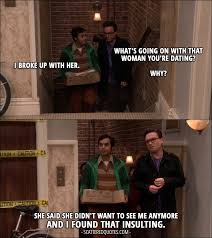
But! you might say. Isn't Sheldon's character making fun of the disabled? He's obviously on the autism spectrum, and he's super annoying! Everyone is always talking about how annoying he is!
That's actually a big part of the appeal of the show, for me. Yes, Sheldon has autism (undiagnosed). He's brilliant, but very routine-oriented and he puts other people out a lot, following his routines. Sometimes they get impatient and even mean to him because of it. Other times he's able to show them how important their tolerance is to him.
I guess what I love is that autism isn't treated respectfully, in hushed tones. Sheldon isn't babied or treated like a hero for existing. Like every other character, he's mocked for his foibles but has time to shine as well. Like anyone else, autistic people can be jerks sometimes. Sometimes their challenges become a challenge for the people around them, and we have to work hard to be patient. Or else we totally fail to be patient. That's a thing that happens too, and BBT isn't afraid to laugh about it.

That's what makes it much more meaningful when Sheldon achieves things. He is one of the best scientists of the batch (equalled, maybe, by Amy) but in his personal life, he really struggles with basic milestones. Yet, one by one, long after the others, he reaches them. And though humor surrounds them, we have some serious, real feelings in those episodes.
The last reason I find the show's portrayal of autism to be so important is that real autistic people I know have learned social skills from it. We can see both Sheldon's point of view and the other characters', so an autistic person watching can think, "Oh, this thing he's doing, which makes sense to me because I do it too, is causing these problems for himself or others. And here's the solution he discovers by the end of the episode!" Amy, in particular, is good for this. She's able both to empathize with Sheldon and to explain the social tactics that will get him out of his mess.

Should BBT be the only show that ever has nerds in it? Obviously not. We should include nerds in more things than comedy shows that make fun of people. But . . . there are lots of shows like that. There's Star Trek. There's Doctor Who. There's Bones. Likewise, there need to be lots of characters with autism on TV, so people understand that all autistic people are not just like Sheldon -- they're unique individuals with their own foibles and talents. But that's hardly BBT's fault.
In short, it's not an offensive show. It's a comedy show like many others. If you don't like it, I don't care. Go somewhere and watch something else, and don't yuck other people's yum. I love it and am not going to stop loving it just because you don't find it funny. I like to hear people like myself and my friends and family tease each other. I like to watch successful scientists tell stories of their awful childhoods--that are over-- while they have fulfilling lives complete with romance and money and scientific discovery. As a nerdy person myself, it encourages me and makes me smile. I think that's about as much as anybody can reasonably expect of a sitcom.
My opinion is that comedy always makes fun of people. Some comedies make fun of bumbling dads and control-freak moms. Some comedies make fun of young, single New Yorkers. To have a comedy about somebody means that person or group gets made fun of sometimes. My favorite other comedy is The Unbreakable Kimmy Schmidt, which makes fun of just about everyone: black people, gay people, Jewish people, Asian people, rich people, poor people. And yet all these characters are humanized as well--they have moments when you realize that even though they are complete stereotypes, they are people and can rise above your expectations.
Of course there could be mean-spirited comedies, where the same people are always the butt of the joke and never humanized or allowed to do anything good. I can't think of a comedy that is like this because I watch so few, but I know I've seen reality TV that was about mocking people. It's ugly and mean, and I can certainly entertain the idea that a comedy is too mean to be a good show.
But is Big Bang Theory like that? I don't see it. Every character has a chance to shine as well as get laughed at. Pick-up artist Howard gets a chance to explain how rejected he feels because women think he's too short and needy to date--and to eventually learn how to treat women. Raj opens up about his shyness and is sometimes a great friend. Leonard, we are meant to sympathize with a lot as the most "normal" of the bunch. And Sheldon . . . we are drawn into his character more than any other. Does he do weird and often inconsiderate things? Sure. But he also gets a chance to explain his feelings. In one episode, he makes Leonard wear a scratchy sweater for days to explain what it's like for him when something isn't finished. He isn't being picky, he's really having a hard time, and we are meant to understand this. And of course he slowly grows as a person and accomplishes things we never would have thought possible. All of this humanizes nerds by showing us the stuff they've gone through, the things they think, the ways they change. They're real characters, never just the butt of a joke.

Then, of course, there are the other characters. Penny is a "cool girl" who gets mocked just as mercilessly as the nerds. Amy and Bernadette are just as nerdy as the men but aren't into their fandom, and they get teased too. Occasionally "jock" type guys appear on the show and are mocked too. It seems pretty equal-opportunity in its humor. If I could change one thing, I'd have more women who play D&D and hang out in the comic book store . . . because geek girls exist despite men always telling us we don't. But they do appear from time to time.

Maybe I'm missing the point of the criticism. Maybe "nerd blackface" means, "non nerds are playing nerds and that's as offensive as white actors playing black characters in movies." But "nerd" is not a race. It's a social designation. Part of an actor's job is portraying different kinds of people. How fine-grained is this? Can a biologist portray a physicist? Can a Star Wars fan portray a Star Trek fan?
Of course, even then, this wouldn't condemn Big Bang Theory, because the show is not a bunch of non-nerdy actors portraying nerds. Several of the actors are really into the stuff they're pretending to be into. Amy is played by Mayim Bialik, who actually is a scientist. And many of the guest stars are nerdy heroes, like Stephen Hawking or Bill Gates, playing themselves.
Basically, I don't understand how you can criticize the show without saying, look, you can make fun of anyone else on the planet, but not nerds. Nerds are permanently off-limits for comedy. There is comedy about black people and Asian people and gay people, but nerd comedy is a bridge too far.
But! you might say. Isn't Sheldon's character making fun of the disabled? He's obviously on the autism spectrum, and he's super annoying! Everyone is always talking about how annoying he is!
That's actually a big part of the appeal of the show, for me. Yes, Sheldon has autism (undiagnosed). He's brilliant, but very routine-oriented and he puts other people out a lot, following his routines. Sometimes they get impatient and even mean to him because of it. Other times he's able to show them how important their tolerance is to him.
I guess what I love is that autism isn't treated respectfully, in hushed tones. Sheldon isn't babied or treated like a hero for existing. Like every other character, he's mocked for his foibles but has time to shine as well. Like anyone else, autistic people can be jerks sometimes. Sometimes their challenges become a challenge for the people around them, and we have to work hard to be patient. Or else we totally fail to be patient. That's a thing that happens too, and BBT isn't afraid to laugh about it.
That's what makes it much more meaningful when Sheldon achieves things. He is one of the best scientists of the batch (equalled, maybe, by Amy) but in his personal life, he really struggles with basic milestones. Yet, one by one, long after the others, he reaches them. And though humor surrounds them, we have some serious, real feelings in those episodes.
The last reason I find the show's portrayal of autism to be so important is that real autistic people I know have learned social skills from it. We can see both Sheldon's point of view and the other characters', so an autistic person watching can think, "Oh, this thing he's doing, which makes sense to me because I do it too, is causing these problems for himself or others. And here's the solution he discovers by the end of the episode!" Amy, in particular, is good for this. She's able both to empathize with Sheldon and to explain the social tactics that will get him out of his mess.

Should BBT be the only show that ever has nerds in it? Obviously not. We should include nerds in more things than comedy shows that make fun of people. But . . . there are lots of shows like that. There's Star Trek. There's Doctor Who. There's Bones. Likewise, there need to be lots of characters with autism on TV, so people understand that all autistic people are not just like Sheldon -- they're unique individuals with their own foibles and talents. But that's hardly BBT's fault.
In short, it's not an offensive show. It's a comedy show like many others. If you don't like it, I don't care. Go somewhere and watch something else, and don't yuck other people's yum. I love it and am not going to stop loving it just because you don't find it funny. I like to hear people like myself and my friends and family tease each other. I like to watch successful scientists tell stories of their awful childhoods--that are over-- while they have fulfilling lives complete with romance and money and scientific discovery. As a nerdy person myself, it encourages me and makes me smile. I think that's about as much as anybody can reasonably expect of a sitcom.
Tuesday, November 27, 2018
Will I NaNo again?
Usually I don't have a real excuse for posting so little, but this time I do: it's National Novel Writing Month. Last year, NaNoWriMo got me back into writing novels after a five-year break, so the entire experience was exhilarating and I finished in 15 days. This year, I've had a much harder time. Part of it was that I wasn't as well prepared. Part of it was that the story I chose was unexpectedly difficult . . . or, perhaps, expectedly difficult. Main characters who are aliens are hard enough to write about. It's doubly hard when your heroine has a voice in her head which is another character. It's just . . . complicated. And the plot . . . oh, the plot. I get stuck every chapter.
The normal way to do NaNo is to start with a completely blank document and write as much as you can without stopping. It doesn't matter if it's junk and will ultimately get deleted. It's a DRAFT, we are reminded. Don't go back and read what you wrote, ever. Don't edit anything. Don't stop to pick the exact right word, just write and write and write. And when you're done, you will have 50,000 words which are a) not very good, and b) not really enough to be a finished adult novel.
I'm realizing that this approach is the opposite of the one that has worked well for me in the past. While I do very much like to get into the zone and really plow ahead on a novel, over the course of a couple of months, I am not much of a drafter. In school I always wrote the final draft first, and then went back to make a fake rough draft to satisfy the teacher. In writing, a "second draft" always winds up being either a complete rewrite with a totally different plot, or else a good draft which has been perfected by daily editing over what I wrote the previous day, followed by pass after pass of editing afterward. There is no cruddy first draft because it's just really really hard to add good words if your words weren't good the first time.
Of course this is a me thing, not an everyone thing. A lot of people do draft after draft. Other people are just starting out noveling so they really just want to make themselves go the distance in a way they never have before.
The way I got around it this time was to "cheat" -- that is, I wrote 21k before November even started, so that by the time November was over I would actually have the novel done. And that worked well for me, except for the constant stalling over plot problems. If I were to do it again, I'd do more outlining before I started, and go back to daily editing of the previous day's work, which always gets me back in the right frame of mind.
I love, love, love the community of NaNoWriMo. I have a facebook group I love, where we rant about the difficulties of writing and challenge each other to word sprints (which I do badly at, but it's nice to know your friends are writing at the same time). I like to track my word count, to a point. That is, I like watching it go up, but I sometimes get too focused on it. Sometimes making your word count go down by a thousand words is much better progress than writing a thousand more.
So will I do it next year? Maybe. Depends on what I'm working on and how ready I am. I think it's important to dive in when you're ready, plotted out, and inspired, rather than when the calendar says you should. And that's why I'm planning, when the alien story is done, to start right back in with another novel: plotting first, then some test writing (writing scenes in different POVs to see what works--that was very helpful for the current novel), and then starting in as I'm ready. Probably not 1667 words per day, like I've been doing, but a little at a time, when I actually have something to write and know where I'm going.
So what am I up to now? I'm basically in the final showdown and I don't know what to do. I've won NaNo (50k words in November -- I have 58k at this point) and my total wordcount is almost 80k, which was what I wanted. But I have to beat the bad guys! Plus, there was supposed to be kissing! We'll . . . we'll see. I just want to get it done, and then maybe see as it's as awful as I secretly suspect.
The normal way to do NaNo is to start with a completely blank document and write as much as you can without stopping. It doesn't matter if it's junk and will ultimately get deleted. It's a DRAFT, we are reminded. Don't go back and read what you wrote, ever. Don't edit anything. Don't stop to pick the exact right word, just write and write and write. And when you're done, you will have 50,000 words which are a) not very good, and b) not really enough to be a finished adult novel.
I'm realizing that this approach is the opposite of the one that has worked well for me in the past. While I do very much like to get into the zone and really plow ahead on a novel, over the course of a couple of months, I am not much of a drafter. In school I always wrote the final draft first, and then went back to make a fake rough draft to satisfy the teacher. In writing, a "second draft" always winds up being either a complete rewrite with a totally different plot, or else a good draft which has been perfected by daily editing over what I wrote the previous day, followed by pass after pass of editing afterward. There is no cruddy first draft because it's just really really hard to add good words if your words weren't good the first time.
Of course this is a me thing, not an everyone thing. A lot of people do draft after draft. Other people are just starting out noveling so they really just want to make themselves go the distance in a way they never have before.
The way I got around it this time was to "cheat" -- that is, I wrote 21k before November even started, so that by the time November was over I would actually have the novel done. And that worked well for me, except for the constant stalling over plot problems. If I were to do it again, I'd do more outlining before I started, and go back to daily editing of the previous day's work, which always gets me back in the right frame of mind.
I love, love, love the community of NaNoWriMo. I have a facebook group I love, where we rant about the difficulties of writing and challenge each other to word sprints (which I do badly at, but it's nice to know your friends are writing at the same time). I like to track my word count, to a point. That is, I like watching it go up, but I sometimes get too focused on it. Sometimes making your word count go down by a thousand words is much better progress than writing a thousand more.
So will I do it next year? Maybe. Depends on what I'm working on and how ready I am. I think it's important to dive in when you're ready, plotted out, and inspired, rather than when the calendar says you should. And that's why I'm planning, when the alien story is done, to start right back in with another novel: plotting first, then some test writing (writing scenes in different POVs to see what works--that was very helpful for the current novel), and then starting in as I'm ready. Probably not 1667 words per day, like I've been doing, but a little at a time, when I actually have something to write and know where I'm going.
So what am I up to now? I'm basically in the final showdown and I don't know what to do. I've won NaNo (50k words in November -- I have 58k at this point) and my total wordcount is almost 80k, which was what I wanted. But I have to beat the bad guys! Plus, there was supposed to be kissing! We'll . . . we'll see. I just want to get it done, and then maybe see as it's as awful as I secretly suspect.
Tuesday, October 23, 2018
How to eat if animals matter
So after that rather mean post about vegans, I feel like I should say something a bit more positive. I actually think considering animal welfare when you eat is an admirable thing to do. I just think there are a lot of ways to do that besides cutting out all animal foods forever and shaming everyone who doesn't.
My personal view is to assign animals moral value, but less than people have. So if I'm doing some kind of moral action, like donating to a charity, I pick human charities because there is so much need there. Yet it's not really zero-sum; you can care about animals without taking away anything from humans.
Going vegan is one way to do that. Now being vegan does not mean that your food choices harm no animals. Animal habitats are destroyed to make farms. Insects and other predators are poisoned to protect your food supply. It's a fact of nature that everything is in competition with everything else; for humans to eat we have to take resources that animals want to use. Perhaps at some future date we'll reach a situation where that isn't the case, but for now, perfect moral purity toward animals is not a reachable goal and I have lots of side-eye for people who think they've met it simply because they're vegan.
That said, a vegan diet causes a lot less animal death and suffering than an omnivorous diet, so that is a good choice if you think you can.
The trouble is, most people don't feel like they could be vegan. There are an awful lot of delicious animal foods out there, and life is hard, and sometimes you just want a pint of ice cream or a Big Mac. And I think rather than sit with the idea that we are less than perfect, we prefer to define perfection such that we're not violating it: "animals don't even matter." Isn't it easier to eat that Big Mac if you assume they don't?
I prefer to carve a middle way where I accept that my moral actions aren't perfect, that there is always more I could be doing, but that I'm doing small things in what ways I can. Some years ago, my big thing was to avoid cruelty to humans in what I buy, which meant no Hershey's or Nestle products and as few new clothes as I could buy. The chocolate situation was easily solved when I discovered Aldi sources its chocolate ethically, but I'm less certain about clothes. I am not sure which clothing companies are more ethical than others. If I stick to used clothes as I usually do, am I sure I'm helping, or am I just preventing my few measley dollars from going to a third world country where they could do some tiny amount of good, if not as much good as if the workers were paid fairly? I don't have the bandwidth to unpick this dilemma right now, so I'm putting it on the back burner for the moment, to pick back up later.
Where food is concerned, I've been wanting for a few years to cut back on animal products, but I've been stymied by my own exhaustion and my family's needs. Marko badly needed to put on weight, so I was sneaking eggs and butter into everything I could. (And then Marko wasn't eating it, so I was eating it, and that's why my gut looks like this.) But things are getting a little easier: Marko has hit the ninth percentile in weight, which is considered healthy. Marko and Michael have both been requesting meatless meals, because neither one likes meat, and the thought of making dinners they wouldn't whine about is a plus. And John is in the process of converting to Orthodoxy, which means he isn't going to be eating animal products on Wednesdays and Fridays. So it seems like a good time to try a little occasional veganism!
All right, so what sort of things might a person do, if you wanted to prevent some harm to animals but weren't interested in going completely vegan? Here are a few ideas:
1. Try to find cruelty-free animal products. It can be hard to be sure of how animals are treated when you're buying something at the store (for instance, "cage free" doesn't mean the chickens are better treated at all) but often it's possible to buy things from local farms. Eggs are the easiest thing to find this way; kids often sell them as a hobby. The price will be higher, but you can combine this with eating less of them overall.
2. Try one meatless or vegan meal a week. Or make all your breakfasts vegan (avocado toast, anyone?) or all your lunches.
3. Reduce the amount of meat on your plate at a meal--take more vegetables or serve a second vegetable dish. Or make tacos with two cans of beans and only half a pound of beef.
4. Give up one single animal product, like eggs or beef. Apparently giving up beef alone would almost solve our climate problem, if everyone did it. If animal misery is what you worry about most, I'd give up eggs. Dairy cows are treated comparatively well, so if there's one thing you keep, I vote milk.
5. Stop making whole meals out of animal products (e.g. a burger) but keep using eggs in recipes, chicken broth in soup, or cheese as a garnish.
For most of my life I've eaten vegetarian (not vegan) at breakfast and lunch because I don't like meat enough to go through the trouble of cooking it more than once a day. And now that John is becoming Orthodox, I'm working in some vegan dinners to serve on Wednesdays and Fridays.
It happens that I love vegan dishes. Only thing is, they're often not very satisfying. I don't feel like I've eaten a meal. However, I don't tend to have tofu or almonds or non-dairy milk around to replace animal products. So I've been trying out different recipes looking for things that actually seem like a meal.
What I've found is that you need to replace meat with more than just protein. Protein is only one of the things meat provides a meal. Meat also provides
-fat
-umami flavor
-variety
-interesting textures
So when I'm looking to make a meal without meat, I can't just make my usual casserole and leave the meat out. Instead, it's a more satisfying meal if I replace the meat with a number of different things, to make sure there is variety, umami, and fat in the finished meal.
For instance, I've started to make meatless chili, but just leaving the meat out makes it very dull. So I make a more complicated chili with sweet potatoes, two kinds of beans, onions browned in oil, and bell peppers. To ramp up the flavor, I make sure to put in plenty of cumin and a splash of lime juice.
Here are some things that I think are really good in vegan meals:
-mushrooms
-soy sauce
-tomato paste
-fermented foods -- miso and marmite are two I'd like to try, but even sauerkraut is a nice addition
-squash of all kinds
-bread on the side -- I feel it helps round out a meal. Foccaccia is a yummy vegan bread.
-seeds or nuts -- sunflower seeds are great on a salad, or sesame seeds on a stir-fry
-avocados. Yum. Like if butter were a fruit.
-anything browned, caramelized, or smoked -- that adds a lot of deliciously complex flavor
-vegetable stock. I got some Better Than Bouillon vegetable stock the other day and it is very tasty. Don't cook in water if you can cook in stock!
To reward you if you've come this far, a recipe!
Black Bean Soup
1/2 cup dry rice
1 can black beans
1 can diced tomatoes
1-2 bell peppers, any color
1 onion
1/2 cup frozen corn
1 quart water or stock
2-3 Tbs oil (olive is fine)
salt, garlic powder, cumin, chili powder, all to taste
splash lime juice
Cook up the onions in the oil till they're starting to brown. Add all the other ingredients except the corn and seasonings and cook about 20 minutes, till the rice is done. Add the corn and season to taste. Serve with crackers or bread.
My personal view is to assign animals moral value, but less than people have. So if I'm doing some kind of moral action, like donating to a charity, I pick human charities because there is so much need there. Yet it's not really zero-sum; you can care about animals without taking away anything from humans.
Going vegan is one way to do that. Now being vegan does not mean that your food choices harm no animals. Animal habitats are destroyed to make farms. Insects and other predators are poisoned to protect your food supply. It's a fact of nature that everything is in competition with everything else; for humans to eat we have to take resources that animals want to use. Perhaps at some future date we'll reach a situation where that isn't the case, but for now, perfect moral purity toward animals is not a reachable goal and I have lots of side-eye for people who think they've met it simply because they're vegan.
That said, a vegan diet causes a lot less animal death and suffering than an omnivorous diet, so that is a good choice if you think you can.
The trouble is, most people don't feel like they could be vegan. There are an awful lot of delicious animal foods out there, and life is hard, and sometimes you just want a pint of ice cream or a Big Mac. And I think rather than sit with the idea that we are less than perfect, we prefer to define perfection such that we're not violating it: "animals don't even matter." Isn't it easier to eat that Big Mac if you assume they don't?
I prefer to carve a middle way where I accept that my moral actions aren't perfect, that there is always more I could be doing, but that I'm doing small things in what ways I can. Some years ago, my big thing was to avoid cruelty to humans in what I buy, which meant no Hershey's or Nestle products and as few new clothes as I could buy. The chocolate situation was easily solved when I discovered Aldi sources its chocolate ethically, but I'm less certain about clothes. I am not sure which clothing companies are more ethical than others. If I stick to used clothes as I usually do, am I sure I'm helping, or am I just preventing my few measley dollars from going to a third world country where they could do some tiny amount of good, if not as much good as if the workers were paid fairly? I don't have the bandwidth to unpick this dilemma right now, so I'm putting it on the back burner for the moment, to pick back up later.
Where food is concerned, I've been wanting for a few years to cut back on animal products, but I've been stymied by my own exhaustion and my family's needs. Marko badly needed to put on weight, so I was sneaking eggs and butter into everything I could. (And then Marko wasn't eating it, so I was eating it, and that's why my gut looks like this.) But things are getting a little easier: Marko has hit the ninth percentile in weight, which is considered healthy. Marko and Michael have both been requesting meatless meals, because neither one likes meat, and the thought of making dinners they wouldn't whine about is a plus. And John is in the process of converting to Orthodoxy, which means he isn't going to be eating animal products on Wednesdays and Fridays. So it seems like a good time to try a little occasional veganism!
All right, so what sort of things might a person do, if you wanted to prevent some harm to animals but weren't interested in going completely vegan? Here are a few ideas:
1. Try to find cruelty-free animal products. It can be hard to be sure of how animals are treated when you're buying something at the store (for instance, "cage free" doesn't mean the chickens are better treated at all) but often it's possible to buy things from local farms. Eggs are the easiest thing to find this way; kids often sell them as a hobby. The price will be higher, but you can combine this with eating less of them overall.
2. Try one meatless or vegan meal a week. Or make all your breakfasts vegan (avocado toast, anyone?) or all your lunches.
3. Reduce the amount of meat on your plate at a meal--take more vegetables or serve a second vegetable dish. Or make tacos with two cans of beans and only half a pound of beef.
4. Give up one single animal product, like eggs or beef. Apparently giving up beef alone would almost solve our climate problem, if everyone did it. If animal misery is what you worry about most, I'd give up eggs. Dairy cows are treated comparatively well, so if there's one thing you keep, I vote milk.
5. Stop making whole meals out of animal products (e.g. a burger) but keep using eggs in recipes, chicken broth in soup, or cheese as a garnish.
For most of my life I've eaten vegetarian (not vegan) at breakfast and lunch because I don't like meat enough to go through the trouble of cooking it more than once a day. And now that John is becoming Orthodox, I'm working in some vegan dinners to serve on Wednesdays and Fridays.
It happens that I love vegan dishes. Only thing is, they're often not very satisfying. I don't feel like I've eaten a meal. However, I don't tend to have tofu or almonds or non-dairy milk around to replace animal products. So I've been trying out different recipes looking for things that actually seem like a meal.
What I've found is that you need to replace meat with more than just protein. Protein is only one of the things meat provides a meal. Meat also provides
-fat
-umami flavor
-variety
-interesting textures
So when I'm looking to make a meal without meat, I can't just make my usual casserole and leave the meat out. Instead, it's a more satisfying meal if I replace the meat with a number of different things, to make sure there is variety, umami, and fat in the finished meal.
For instance, I've started to make meatless chili, but just leaving the meat out makes it very dull. So I make a more complicated chili with sweet potatoes, two kinds of beans, onions browned in oil, and bell peppers. To ramp up the flavor, I make sure to put in plenty of cumin and a splash of lime juice.
Here are some things that I think are really good in vegan meals:
-mushrooms
-soy sauce
-tomato paste
-fermented foods -- miso and marmite are two I'd like to try, but even sauerkraut is a nice addition
-squash of all kinds
-bread on the side -- I feel it helps round out a meal. Foccaccia is a yummy vegan bread.
-seeds or nuts -- sunflower seeds are great on a salad, or sesame seeds on a stir-fry
-avocados. Yum. Like if butter were a fruit.
-anything browned, caramelized, or smoked -- that adds a lot of deliciously complex flavor
-vegetable stock. I got some Better Than Bouillon vegetable stock the other day and it is very tasty. Don't cook in water if you can cook in stock!
To reward you if you've come this far, a recipe!
Black Bean Soup
1/2 cup dry rice
1 can black beans
1 can diced tomatoes
1-2 bell peppers, any color
1 onion
1/2 cup frozen corn
1 quart water or stock
2-3 Tbs oil (olive is fine)
salt, garlic powder, cumin, chili powder, all to taste
splash lime juice
Cook up the onions in the oil till they're starting to brown. Add all the other ingredients except the corn and seasonings and cook about 20 minutes, till the rice is done. Add the corn and season to taste. Serve with crackers or bread.
Thursday, October 11, 2018
Nobody likes vegans and prolifers


You know that joke? "How can you tell if someone's a vegan? Don't worry, they'll tell you."
It's kind of true. I briefly followed a vegan online and the vegan posts were unending. You know the kind of stuff: rude assumptions about meat eaters, references to people "forcing their children to eat rotting corpses," pictures of slaughterhouses, adorable pictures of pigs, Holocaust references. I got tired of it and unfollowed. It just felt extreme.
It occurred to me that this is the same kind of thing I'm used to seeing from the prolife movement: constant posts, graphic pictures, attributing evil to prochoicers, and Holocaust comparisons. Nobody likes it; it makes them uncomfortable, but the prolifers, like vegans, just can't stop.
And it makes sense, really. Prolifers and vegans both believe that they are witnessing a moral disaster, worse than a nuclear bomb or a genocide. It's pretty hard to stay moderate and appealing when you legitimately think thousands or millions of morally significant beings are being murdered every day. But the backlash comes from the same place: nobody likes to feel they are being accused of supporting a moral catastrophe. That's why people sneer at vegans, mock their food choices, or start arguments about the health of their diet. It's why a prolifer I know got egged outside a clinic. It's downright offensive to accuse people of being okay with something deeply morally wrong.
The trouble is, the rights of animals and embryos are on the fringes of morality. I've said before that basic morality is provable through reason, but the actual foundation you choose to underlay it all is a bit arbitrary -- you have to choose who to include in your circle of morally significant beings, and you have to choose whether to value life, liberty, or happiness most. The result is that we'll all agree on the morality of some things, like slavery or murder, but in fringe cases like animal rights or abortion, we will diverge -- all while considering ourselves to be reasonably moral people.
Unfortunately arguments about these things tend to miss the point. We assume people share our moral foundations, so we attribute evil motives to them ("they hate babies"/"they don't care about suffering") while failing to address the real differences in morality.
The difference here is mainly the circle of morally significant beings. A prolifer puts the boundary at "members of the human species." If it's a human, and it's alive, it's equivalent to any other living human. An eight-cell zygote is exactly as significant as you are. A vegan, on the other hand, tends to place it at "beings that can experience happiness or suffering." So they will find it absurd to value the zygote more than a chicken, because the zygote has no awareness we know of, nor any brain to be aware with, while the chicken clearly suffers when locked in a battery cage. Sometimes they accuse the prolifer of lying about their motives, and simply wanting to oppress women. (And some prolifers really do seem to want that; but most, I think, are completely honest.)
Given that the decision which to value is mainly arbitrary, or else handed down from a religion, it's unlikely to be fruitful to argue about these principles. Instead, I think both groups might benefit from selling a milder form: Okay, say an embryo isn't exactly as valuable as a toddler. Or a chicken isn't exactly as valuable as you are. That doesn't mean these beings have no moral value. If you could preserve these lives without sacrificing the life, liberty, or happiness of adult humans, wouldn't you want to do that? I don't think a chicken is equal to a human, but all things being equal, of course I'd prefer it if chickens weren't debeaked and locked in battery cages.
To get here, people have to discard the "you're a moral monster" part of the argument. Instead they should try to stay positive about small changes people could make that wouldn't throw any other moral value (the liberty of women; feeding the hungry) under the bus. For instance, donating to a pregnancy center that supports women who want to keep their pregnancies but can't afford to. Or supporting laws that make insurers cover the cost of pregnancy and birth. Or eating a vegan meal one night a week. Or buying cruelty-free meat.
Would a prolifer or vegan really be satisfied if people made these choices and didn't go the whole way? Of course not. The prolifer won't be happy till embryos have the same exact rights an adult human has; and the vegan won't be happy until everyone gives up meat. But these are goals they won't actually be able to achieve, not in our lifetimes at least. So I'm just suggesting that in their outward messaging, they focus on these goals. Think about it: what are the odds of converting one person to a vegan? Pretty low. But you might have better luck converting seven people to once-a-week vegans, and that saves the exact same number of cows. Likewise, we're not making abortion illegal right now (and if we could, people would still get them) but there are lots of interventions which lower the abortion rate.
I don't know how many vegans or prolifers read this blog, but if you are one, I highly recommend dropping the language about how horrified you are and how terrible people not on your team are. They aren't terrible, they're working their morality from completely different assumptions. Now they're doing a great deal of harm, by your standards, but they need to be convinced, not condemned. And the gentle, positive, incremental way is going to work a lot better for your goals.
Subscribe to:
Posts (Atom)
